Watching the finals at the Mubadala DC Open, I saw the same lessons I teach women leaders every week: lead yourself first, and don’t accept less.

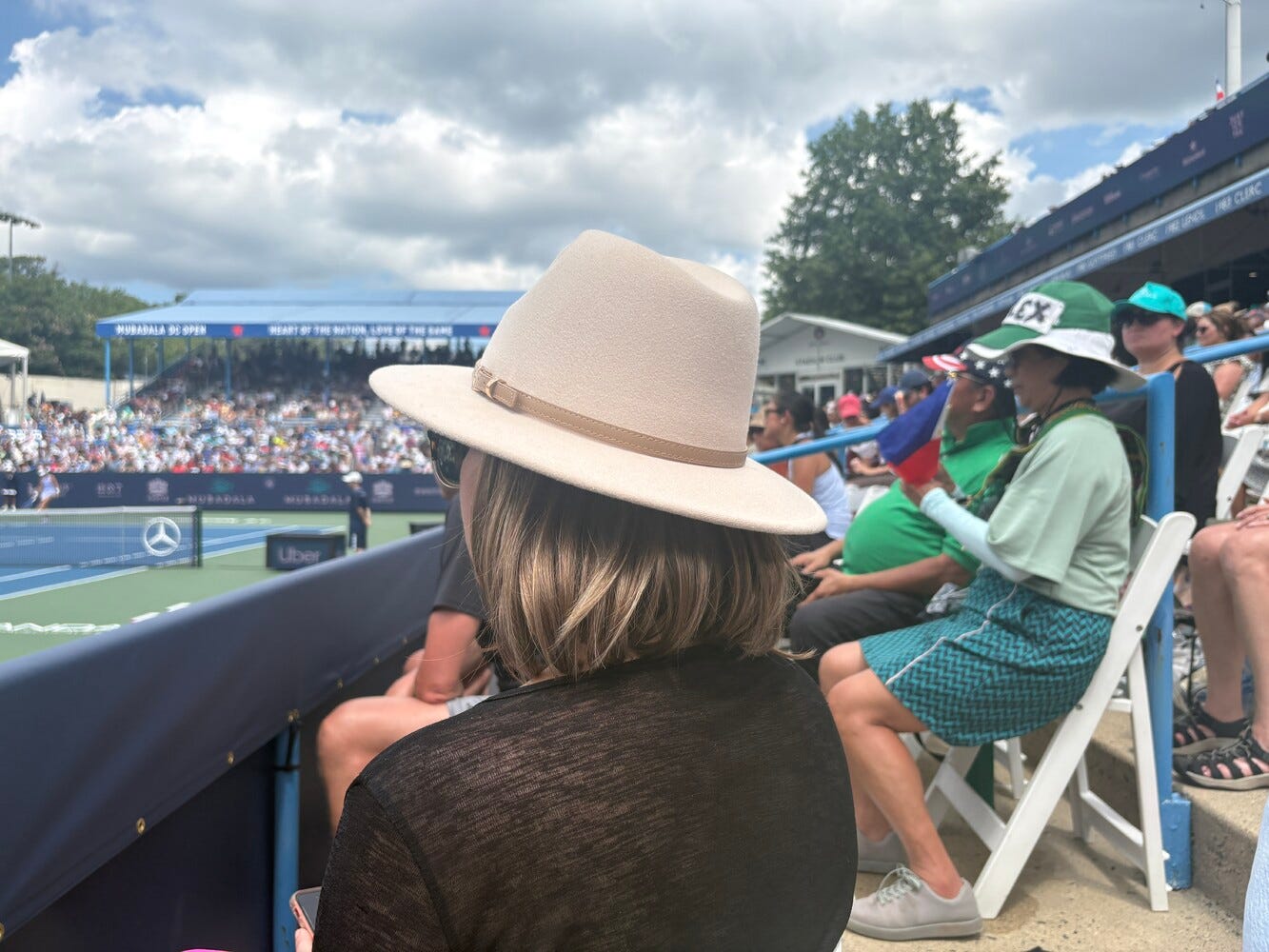
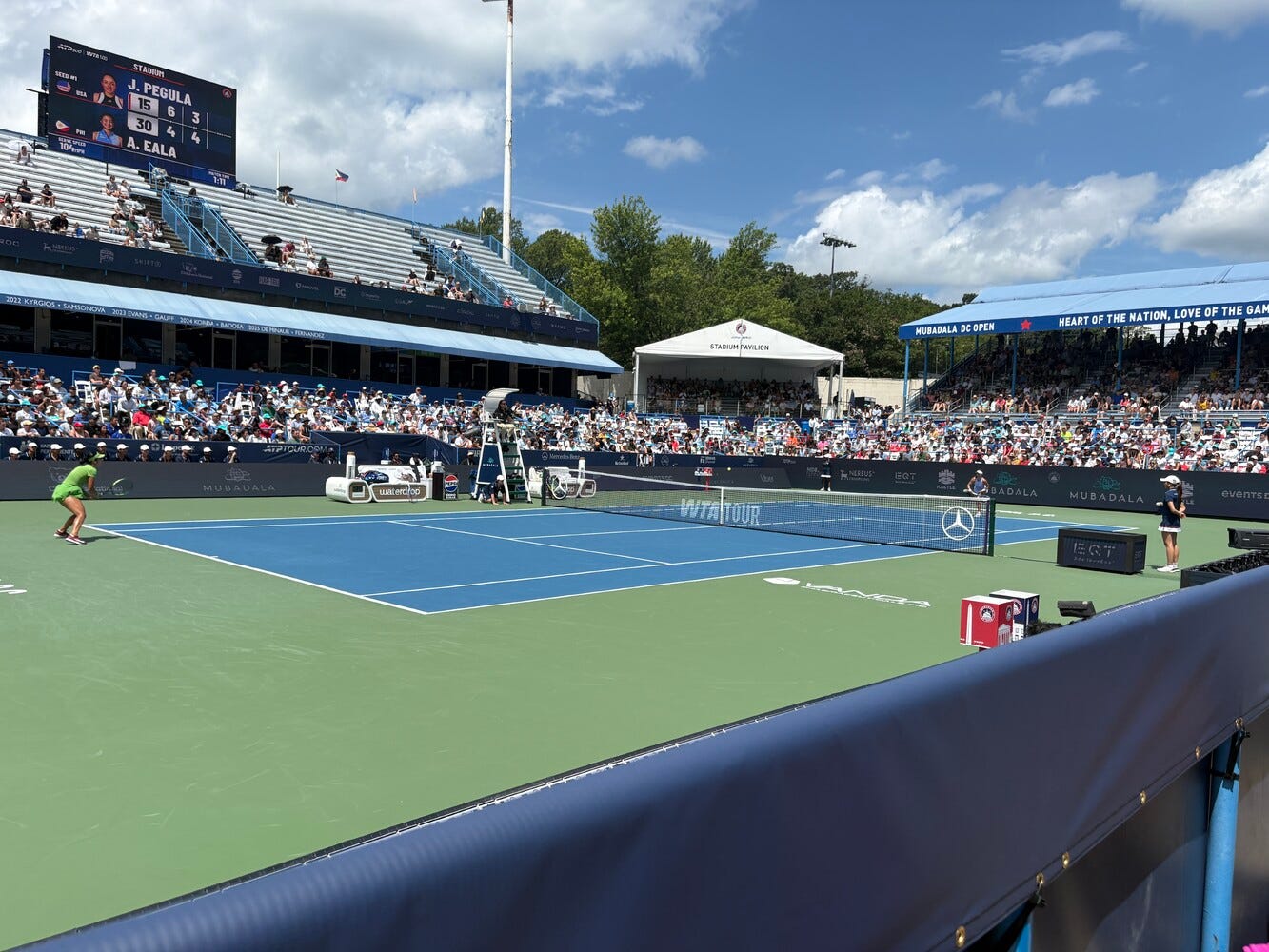
This week I had the privilege to sit courtside for the Women’s and Men’s finals at the Mubadala DC Open — 90-degree heat, players sprinting full-out to slam the ball over the net, hoping their opponent wouldn’t be able to return it. After a rainy Sunday pushed everything to Monday, I was impressed to see so many people there.
The story of the tournament was undeniably Alexandra Eala. The 21-year-old from the Philippines walked into the final ranked well outside the top 50 and beat Jessica Pegula, the tournament’s top seed and #3 in the world, 4-6, 6-4, 6-0, becoming the first player from the Philippines to ever win a WTA Tour singles title. She’d already knocked out Elina Svitolina in the quarterfinals and Naomi Osaka in the semis. By the time she reached the final, she’d taken down three players with a combined résumé most players spend a career chasing.
I have been to a lot of tennis tournaments. I have never seen fans like the ones that showed up for Eala. Filipino flags everywhere. Homemade signs. People with her name written across their chests and hats. The tournament’s ticketing office announced that 80 percent of the questions they fielded that week were about her.
The upset was the headline. But the detail I kept noticing was her determination. She was fighting, and you could tell she wanted to win this not only for her, but for her country. The president of the Philippines congratulated her on her achievement, saying “You continue to redefine what is possible for Philippine tennis and inspire countless young Filipinos to dream without limits.”
As I scrutinized her shots, I could see she was ready, on her tip toes, with a fighting spirit that threw her after every ball. She returned incredible shots from Pegula that looked like impossible gets, and managed to whip them back over the net with power, dexterity, and a Monica Seles-like grunt. She decided to chase every ball down before the point even started. She matched her talent with intention, dedication, discipline, mindset, and grit. She did not let a lost point bring her down.
I coach leaders for a living, and one thing I’ve realized is that leading people is the second job. You cannot lead others until you learn how to lead yourself. This means showing up to train on the days you don’t want to, catching yourself before your mindset turns a bad game into a bad match into a bad tournament, taking the “L” (failing fabulously), having an actual plan for how you get from where you are to where want to go, investing in a coach and leadership development programs to support and guide you (shout out to The Women’s Leadership Challenge , knowing where your strengths are (what a backhand), and what needs polishing, asking for help when you need it, taking time to recharge so you can operate at optimal performance when it matters most. Eala did all of that.
Every founder or executive I’ve worked with who’s pulled off something people didn’t expect has learned to lead themselves first – and when they haven’t, it can often end up becoming a burning dumpster fire. They end up having a demonstrable negative impact on their company, their people, and themselves, even if their product makes it to market.
I also spent a good chunk of the match listening to the coaches in the players’ boxes, who were not just telling them to play up or play back but managing morale. Reminding players of their strengths and sweet spots. Getting them to reset after a bad game instead of carrying it into the next one. Cheering them on with steadfastness. Showing up. Celebrating their wins and being there for their losses. That’s the part of coaching people underestimate: keeping someone’s head in the match when their instinct is to give up and check out. It made me proud as a coach, as I have made a sincere effort to show up for my clients, to be there for them through it all, to lift them up when they are hurting most, and to push them when I know they are inches away from a huge win but are doubting themselves.
I almost cried when Aela scored the final point, collapsing onto the court with her head in her hands. In her win was the heart of her nation.
But one thing was really bothering me.
Eala took home $252,000. This year’s men’s champion, Taylor Fritz, took home $461,835. (not downplaying Taylor, because what a phenomenal player).
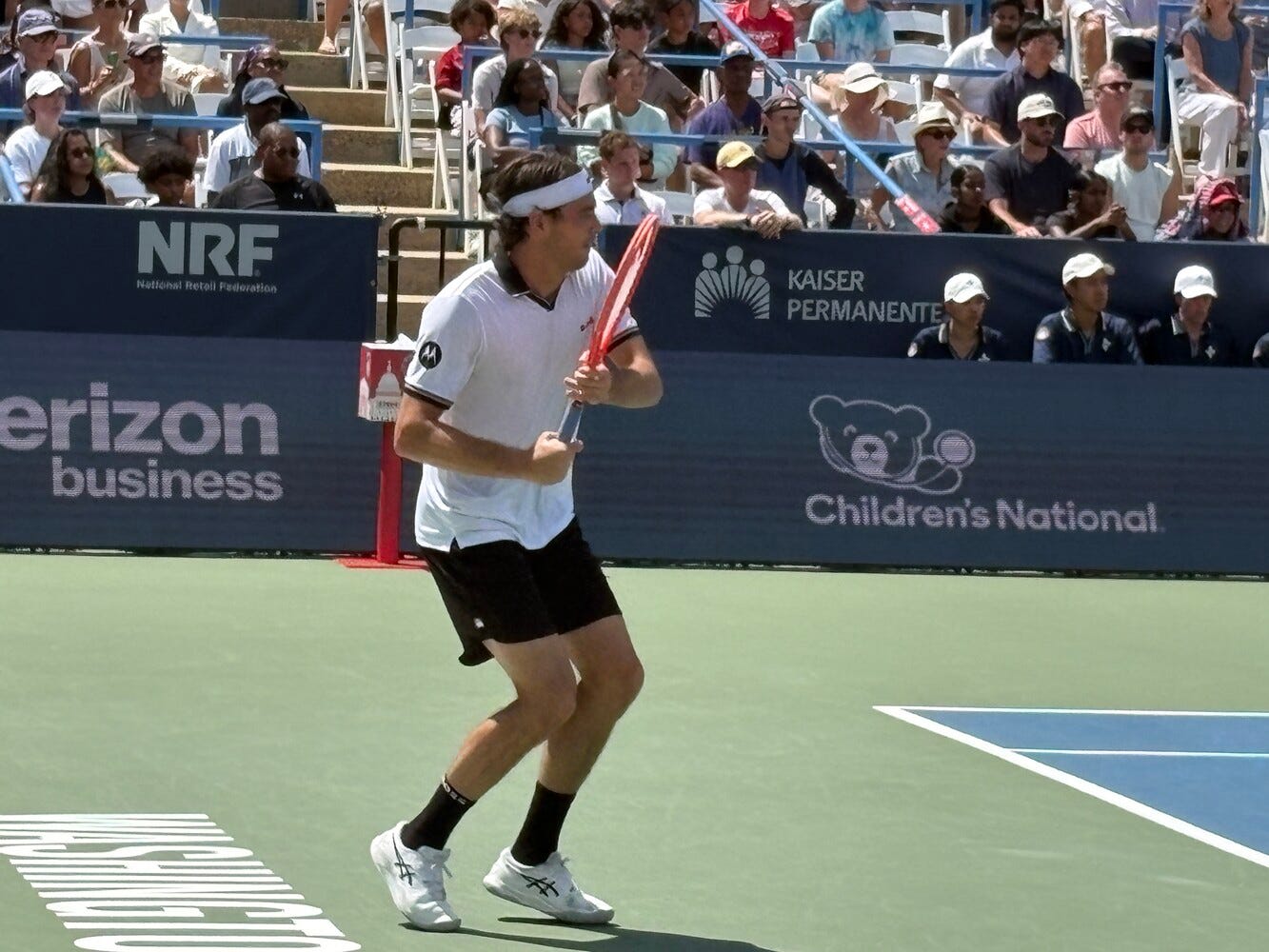
That’s a $209,835 gap, on the same weekend, at the same venue, in front of the same crowd. Unlike some other matches where the men play 5 sets and the women 3, both men and women played 3. Total purse across the draw: $2.47 million for the men, $1.64 million for the women.
Tennis likes to tell itself it solved pay equity.
All four Grand Slams now pay women and men equally, with the US Open committing to it first, in 1973. This was largely due to the advocacy, talent, and determination of Billie Jean King.
If you don’t know her name, you should. She’s one of the greatest players in tennis history, winning 39 Grand Slam titles between singles, doubles, and mixed doubles. In 1972, she won the US Open and took home $10,000. That same week, the men’s champion, Ilie Nastase, won $25,000 for the same title on the same courts. King told tournament organizers she wouldn’t play the 1973 US Open unless that gap closed. The draw for 1973 was not the men’s players – it was Billie Jean King, and they knew without her, they were in trouble.
King didn’t stop there. Ahead of Wimbledon that same year, she gathered 63 players in a London hotel room and founded the Women’s Tennis Association, building the infrastructure for a women’s representative body with negotiating power and resources, rather than letting women be a sideshow to the men’s tour. A few months later, at 29, she beat 55-year-old Bobby Riggs in the “Battle of the Sexes.”
90 million viewers tuned into their televisions to watch the match. The joke was on Riggs, as he had organized it specifically to prove that women’s tennis wasn’t worth taking seriously. She proved the opposite.
The Australian Open followed The US Open in 2001, the French Open in 2006, and Wimbledon, the last holdout, in 2007, after years of public pressure from Venus Williams. Thirty-four years passed between King’s threat and Wimbledon finally falling in line. This is a reminder that advocacy and change take time, persistence, global organizing efforts, and sometimes, healthy competition.
The DC Open is the first and only combined ATP (Association of Tennis Professionals) and WTA 500 event of its kind, which is amazing. But pay parity when it comes to everything, but the grand Slams is nonexistent.
The usual defense in the pay gap is viewership, that fewer people watch women’s tennis, so the money follows the audience. The data doesn’t back that up. The US Open women’s final has out-rated the men’s final in four of the last five years. Wimbledon runs the other direction, with the men’s final drawing more viewers. It’s not a consistent pattern, which means it’s not an economic argument.
I watched both finals. Same Monday, same stadium. The crowd for the women was about the same as the men. There was a void in some of the energy after Eala’s match, as many of her fans didn’t come for the men’s match, standing outside in droves trying to get her signature instead. The fight that Rafa Jodar and Alex Eala put up, from where I was sitting less than 40 feet away from them, was similarly fierce. (I do have to give a shout-out for the men’s serves, though – holy moly, watching someone serve a ball at 125-147 miles an hour is like watching a rocket ship take off. That discrepancy between men and women has to do with biomechanics and height, though, rather than effort or skill.)
But aside from the serves, the main difference was the pay.
The WTA has said it wants pay equity across its title tournaments by 2027. I just can’t imagine having sweated my heart out to win the open, and then winning half as much as the male winner. Like, WTAF.
The gap at the DC open this week isn’t unique to tennis. I have coached dozens of women on how to advocate for a pay correction after finding out they are being paid less than their male counterparts. I’ve also experienced it myself. It is a shock, a betrayal, a demotivating, infuriating, soul-sucking experience when you find out your male peer, who sometimes has less education and less work ethic, is being paid more than you.
This isn’t a bigger ask. It’s the same one Billie Jean King made in 1972: return the serve.
And a huge congrats to Eala, to Pegula, to Fritz, to Jodar, and to all the players who showed up and played their hearts out. We see you, and many of you inspire little boys and girls to want to grow up playing tennis. Just like me at age 4, when I first stepped onto the court with a ball in one hand, a racket in the other, and my tennis champ dad Roger serving the ball over to me patiently as I ran around the court trying to hit it over the net.
And to my tennis coach who looked at me one day, put his hand on my shoulder, and said, Sam, you’re an athlete. Despite playing number one in high school (with many, many losses), I had never used that word. Realizing you’re an athlete is like realizing you’re a leader – it’s your responsibility and your opening to step in and expand your talent; it’s time to really play the game.
—
Sources: [WTA Tennis](https://www.wtatennis.com/news/4553195/eala-completes-pegula-comeback-to-win-washington-first-wta-title-for-the-philippines), [CNN](https://www.cnn.com/2026/08/03/sport/alexandra-eala-first-filipina-wta-tour-title), [Al Jazeera](https://www.aljazeera.com/sports/2026/8/3/tennis-philippines-eala-wins-first-wta-title-fritz-claims-dc-crown), [bet365 News](https://news.bet365.com/en-us/article/2026-mubadala-dc-open-purse-breakdown/2026072817580041042), [Tennis Majors](https://www.tennismajors.com/wimbledon-news/february-22-2007-the-day-wimbledon-finally-announced-it-would-award-equal-pay-323512.html), [ESPN](https://www.espn.com/tennis/story/_/id/24599816/us-open-follow-money-how-pay-gap-grand-slam-tennis-closed), [HISTORY](https://www.history.com/articles/billie-jean-king-equal-pay-for-play), [CNN – Billie Jean King](https://www.cnn.com/2013/08/20/sport/tennis/tennis-billie-jean-king-wta-equality/index.html)
This article was originally published on Samantha Politics: The Empowered Global Leader.